
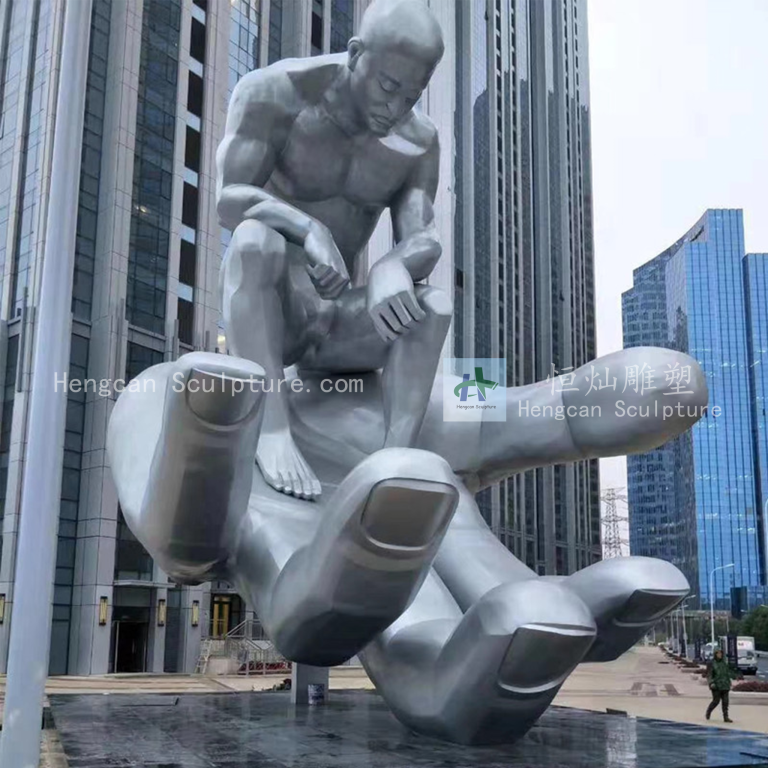
Stainless steel sculpture is a prevalent art form in modern urban landscapes. Thanks to its distinctive material properties and versatile artistic expression, it plays a vital role in public spaces, architectural decoration and other fields.
Stainless steel boasts outstanding material advantages. It resists corrosion from mild agents such as air, steam and water, as well as chemical corrosives including acids, alkalis and salts, enabling sculptures to remain stable outdoors for a long time. Compared with traditional sculptural materials like cast bronze and stone, stainless steel is less prone to rust, easy to clean, wind-resistant and extremely durable. For instance, in coastal cities with high salinity in the air, sculptures crafted from 304 stainless steel deliver superior corrosion resistance and retain a neat and attractive appearance.
In terms of design, stainless steel features excellent malleability. It can be fashioned into geometric sculptures, round sculptures, abstract works and many other forms with rich and diverse themes. Designers can fully unleash their creativity to create distinctive artworks tailored to different themes and scenarios. A wide range of surface finishing techniques are also applied to stainless steel sculptures, including mirror polishing, wire drawing, spray painting and electroplating.
- Mirror finishing adopts high-precision polishing to create a reflective surface that mirrors the surrounding scenery, generating unique light and shadow effects and strong visual impact.
- Wire drawing forms uniform linear textures on the surface, delivering a delicate tactile feel and layered aesthetics to enrich artistic expression.
- Spray painting diversifies color options while boosting weather resistance and corrosion protection.
- Electroplating uses electrolysis to coat the surface with metals such as chromium, nickel and titanium, enhancing luster, wear resistance and anti-corrosion performance.
Stainless steel sculptures have extensive applications. For architectural decoration, they are widely used on the facades of modern buildings or as decorative accents at gateways, lobbies and other areas. They create striking contrasts with glass curtain walls and add depth to spaces. For environmental beautification, sculptures installed in urban parks, plazas and residential communities elevate the overall environment, bringing visual delight and spiritual comfort to people. Some large-scale pieces even serve as city landmarks, drawing public attention and boosting urban popularity.
Indoors, small stainless steel sculptures are popular home decorations that liven up living spaces and cultivate a cultural ambiance. They are also displayed in hotel lobbies and offices for presentation and branding. Beyond artistic uses, the material serves industrial purposes too, such as manufacturing elevator handrails, pipe supports and mechanical casings, as well as bridge railings, monuments and outdoor furniture.
With superior material performance, diverse design possibilities and wide-ranging applications, stainless steel sculptures have become an indispensable part of modern urban landscapes. They infuse cities with artistic charm, meet functional demands of various settings, and perfectly integrate art with practicality.