As an indispensable artistic medium in modern urban landscapes, stainless steel sculptures have become iconic symbols of aesthetics in public spaces, thanks to their unique material properties and diverse artistic expressiveness. From urban plazas and commercial centers to cultural landmarks and private collections, their excellent weather resistance, formability and modern style have redefined the boundaries of outdoor art.
I. Material Properties: Dual Advantages of Durability and Artistry
The core strengths of stainless steel sculptures derive from the physical and chemical characteristics of the material. Mainstream grades such as 304 and 316 stainless steel contain alloying elements including chromium and nickel, which form a dense protective oxide film. This grants the material outstanding resistance to acid, alkali and high-temperature oxidation. Test results show that under simulated extreme weather conditions, premium stainless steel has a corrosion rate below 0.01 millimeters per year, with a service life of over 50 years. Such superior durability cuts maintenance costs effectively and enables the sculptures to retain their silvery metallic luster or vibrant colored coatings for decades.
The material’s superb formability unlocks endless possibilities for artistic creation. With processes like laser cutting, forging and welding, stainless steel sheets can be processed into ultra-thin plates as thin as 0.5 mm or shaped into streamlined curved surfaces. For sculptures finished with 8K mirror polishing, the surface roughness reaches Ra 0.01 μm, which reflects surrounding light and scenery dynamically to deliver vivid visual effects. Surface treatments such as wire drawing and sandblasting further create delicate textures and distinct layered appearances.
II. Artistic Expression: Diverse Creations from Figurative to Abstract Styles
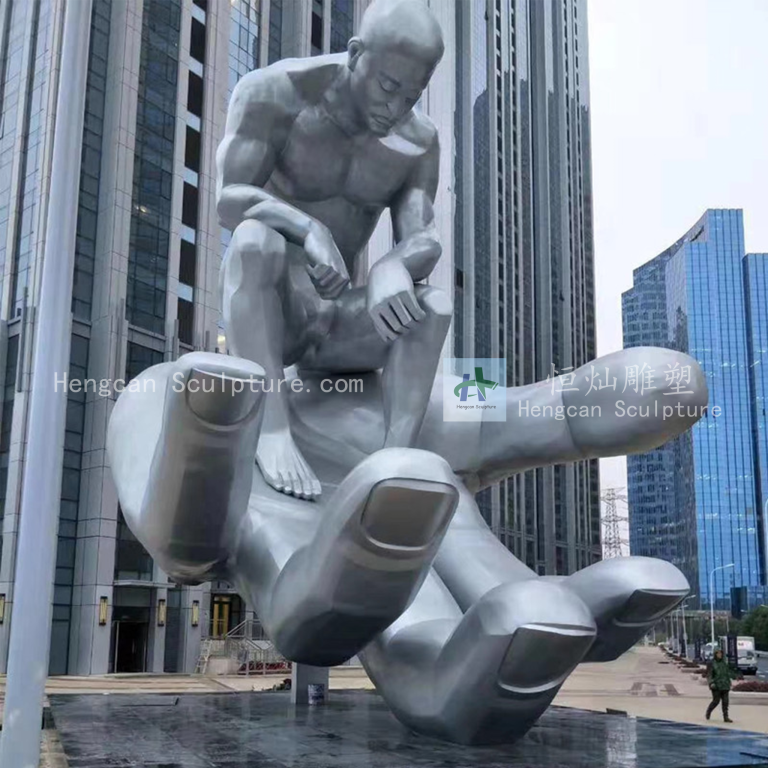
Stainless steel sculptures feature two major artistic expressions: figurative realism and abstract art. For figurative works, precise shaping and detailed carving endow sculptures with strong narrative power. For example, figurative sculptures in urban plazas utilize the reflective quality of mirror stainless steel to blend visitors’ silhouettes with the artworks, blurring the line between art and reality. In abstract creation, the industrial texture of stainless steel complements geometric shapes perfectly. Forms such as hollow spheres and twisted curved surfaces echo modernist aesthetics and reinterpret spatial relationships.
III. Application Scenarios: Integration of Public and Private Spaces
Stainless steel sculptures are now widely used across diverse settings. In the field of public art, large-scale urban sculptures serve as visual symbols of regional culture. Standing over 10 meters tall, abstract works with streamlined contours and mirror surfaces blend urban skylines with natural scenery, attracting tens of thousands of visitors every day. In commercial spaces, medium and small-sized sculptures act as brand symbols or interior decorations. Hollow animal sculptures placed in shopping mall atriums elevate the overall ambiance and bring interactive fun to customers.
Demand for stainless steel artworks is also rising rapidly in the private collection market. Artists integrate personalized design with exquisite handcraftsmanship. Small sculptures made via lost-wax casting retain subtle texture traces from molds, making each piece a unique artwork. Beyond decorative value, these pieces serve as cultural symbols that reflect collectors’ artistic taste.